
 School Dashboard
Date
08/10/2026
Position Information
Position desired: Teacher
Subjects you can teach: 7-12 Humanities Teacher, 7-12 Literature Teacher, 7-12 Philosophy Teacher, 7-12 Theology Teacher, Latin-Basic Teacher
Willing to relocate to: Anywhere in US
Summary:
Learning is not simply my livelihood; it is my life-long passion. That being said, having spent the past six years in academia, I have only grown more concerned with the state of education in our society. What has been so saddening to realize is that learning for the sake of becoming a human who loves the Good, the True, and the Beautiful is so far gone that most individuals unhesitatingly surrendered the vocation of learning to AI. Because of this, I am finding myself renewed in my vigor to excite in students a love of learning, for more than ever, the survival of a well-educated society depends on it. As a doctoral student in medieval literature, I have felt at home among the thinkers and writers of the past who pursued knowledge not for its own sake, but for the sake of grasping hold of God so that they may love Him more. I want to pass that spirit on to my students, and teaching in a classical school would be the perfect context for me to do so.
My educational background makes me suitable for teaching a wide variety of subjects in the humanities. My undergraduate degree was in philosophy, and my masters degree was a general survey of English literature. My doctoral research is focused on Anglo-Latin biblical literature from the twelfth century, though I have also done extensive research into medieval Irish literature. I would feel at home teaching not only literature classes, but also introductory philosophy, Latin, and medieval church history and theology classes.
I am currently in the dissertation stage of my degree with a graduation date of May 2027. My hope is to begin teaching in the 2027–2028 school year.
5051 W Highland Knolls Rd Apt 309
Rogers, AR 72758 United States
Home Phone:
Cell Phone: (405) 902-3258
Email: [email protected]
CV or Resume
Website
Facebook Page
LinkedIn
Highest Level of Education: Master’s Degree
Institutions Attended:
| Institution Name | Degree Earned (i.e., BA in English) | Date Graduated | Emphasis |
|---|---|---|---|
| University of Arkansas | M.A. in English Literature | May 2022 | Generalist |
| Oklahoma Baptist University | B.A. in Philosophy | May 2019 |
Employment History:
| Position | Employer | Dates of Service | Description |
|---|---|---|---|
| Graduate Teaching Assistant | University of Arkansas | 8/2020–Present | Independently taught 1000 level courses |
Additional Qualifications: I am the oldest in a family of nine children, and when I was in high school I began helping my mother teach the younger children. I took over the preschool education of my three youngest siblings, tailoring my curriculum to meet their learning needs. One child was non-verbal when I started working with him, and by the end of two years, he was reading three and four letter words on his own. The second child was autistic, so I had to adapt to his learning style and play into his strengths to help him succeed. He was reading at a Kindergarten level by the time he completed two years with me. The last child did not have any particular learning challenges, so I was able to take her even further. For all three children, I adopted classical education methodologies, exposing them to great books at a level they could comprehend. I also worked with them on memorization of Scripture and catechesis questions.
Additional Experience with CCE: Though I have pretty tight constraints when it comes to modifying my university courses, I have tried where possible to expose my students to classical educational ideas and methodologies. I have the most freedom for this in my literature courses. Where possible, I try to take students through entire books. This allows me to teach the students how to inhabit the world of a book, to understand the moral world of the story so as to engage with it meaningfully. Class discussions take the form of Socratic dialogue where possible so that students learn how to ask thoughtful questions about the text and interpret it articulately. The focus is always on the enduring questions that literature has been asking across centuries and cultures, showing students how conversing with great works of literature shapes both the mind and the soul.
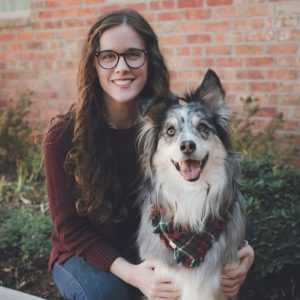
Hobbies, Interests, and Family: My hobbies include watercolor, piano, fantasy literature, photography (digital and film), nature walks, and watching old films and tv shows. I am single, but I have an Australian Shepherd dog named Baer who is the light of my life. We have lots of adventures in the woods and trails near our home, and his joy for life keeps my eyes open to the little wonders around me.
Top 5 Books: My list is somewhat non-traditional since my studies have been in medieval literature for the past four years:
Beowulf
Tales of the Elders of Ireland
Hamlet
The Song of Roland
The Ecclesiastical History of the English Speaking People
Top 3 Books: Katabasis by R.F. Kuang: I went into this book mostly blind. All I knew about it was that it was a fictional/fantasy story critiquing the darker side of graduate school. I thought it might be a very cathartic read, and it did not disappoint.
The Farseer Trilogy by Robin Hobb: I wanted to read some slightly older high fantasy literature, and these came highly recommended to me for their character development and world-building. I am a firm believer in Tolkien’s justification of the healthy escapism of fairy stories, and these books certainly followed his guidelines for a true fairy story.
Lectio Divina: The Medieval Experience of Reading by Duncan Robertson: This book was on my list for dissertation research, but I was also interested in the medieval reading experience for its own sake rather than simply for a footnote.
Most Influential Books: The Lord of the Rings trilogy
The Silmarillion
Les Misérables
Katabasis
The Harry Potter series
The Hypognosticon (the text I’m researching for my dissertation)
Pilgrim at Tinker Creek
The Odyssey
Sacramental Poetics at the Dawn of Secularism by Regina Schwartz
This Beautiful Truth by Sarah Clarkson
The Road by Cormac McCarthy
The Brothers Karamazov by Fyodor Dostoevsky
Preferred Denomination Type: Anglican/Episcopal
Current Church: St. Gabriel’s Anglican Church
Current Church Denomination: ACNA
Current Church Membership: Yes
Current Church Attendance: Weekly
Support of Traditional Marriage: Yes
Theology: I would describe myself as a strongly traditional Anglo-Catholic Christian, one who is highly sympathetic to medieval and patristic inheritances. I see Christian doctrine as something inherited from the historic Church, not something that is continually reconstructed and re-imagined for modern thought and sensibilities. I would be very much at home in theological conversations with Lewis and Tolkien. In short, I am classically orthodox, sacramental rather than memorialist, traditional in biblical interpretation, and ecclesiastically Anglican (historic Anglicanism, not so much in conformity with contemporary Anglican practices, such as women’s ordination).
Belief in the inerrancy of Scripture?: Yes
Notes on Scripture: My belief in this has made me very conservative when it comes to considering modern interpretations of Scripture, for they often involve some level of desire to correct or improve upon what the text actually says. Furthermore, because of my background in translation, I am acutely aware of the fact that all biblical translations are unavoidably interpretive, so I don’t quite feel comfortable saying that vernacular translations are inerrant–just the original language editions are truly inerrant.
Additional classical training: I have not had formal classical training, but I have read articles on the subject, most notably the essay by Dorothy Sayers titled “The Lost Tools of Learning.”
Why I want to teach at a classical school: I desire to work in a classical school so that I can fully immerse my teaching style in the classical model. This is because I firmly believe that it is the strongest pedagogical method for keeping the ultimate biblical aim for pursuing knowledge at the center of the classroom: the pursuit of delight in God, in all his Goodness, Truth, and Beauty. One of the main takeaways I got from reading Kuang’s book Katabasis is that, since the high Middle Ages, the end of learning has increasingly been aimed at gaining knowledge for its own sake, which to me is a very lapsarian ideal. Classical Christian schools, in my view, are one of the last educational institutions which see learning as a means of attaining a deeper, transformative image of God, one that moves the heart to love rather than sin.
Final thoughts: I am on track to completing my dissertation sometime around December-January pending any unforeseen circumstances. My defense will be sometime in the spring semester, and I will graduate in May 2027.