

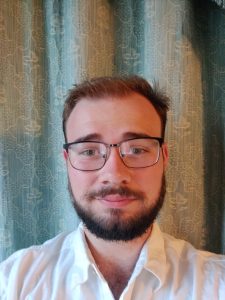
Date
01/19/2026
Position Information
Position desired: Teacher
Subjects you can teach: 7-12 Humanities Teacher, 7-12 Literature Teacher, 7-12 Philosophy Teacher, 7-12 Theology Teacher, Latin-Advanced Teacher, Latin-Basic Teacher
Willing to relocate to: Anywhere in US, International
Summary:
I am a passionate and academically accomplished graduate in Classics and Theology, eager to pursue a high-school teaching role in Latin, Ancient Civilisations, Ancient History, Philosophy, or Religious Education.
With a 2:1 MA (Hons) in Classical Archaeology & Ancient History (University of Edinburgh) and currently achieving an MLitt in Systematic & Historical Theology (University of St Andrews), I can offer expertise in the ancient world and Christian doctrine, enabling me to integrate faith with classical learning. My awards include the Imke Schutter Memorial Prize for outstanding Ancient History coursework and the Pinkerton Prize for excellence in Latin finals. At my high-school, I achieved three As at A-level in Classical Civilisation, Economics, and Mathematics, plus strong GCSE results.
My teaching placement at Ballymena Academy (June 2025) confirmed a passion for teaching: I planned and delivered engaging lessons in Classical Civilisation to a Year 11 class (grade 9). I used and developed resources from my supervising teacher, and received praise for subject command, clarity, and pupil engagement. My pastoral experience includes serving as camp counsellor at Highlands PCUSA Camp & Retreat Centre, Colorado (June–August 2022), where I led devotions, educational activities, and outdoor pursuits for 8–18-year-olds, managing behaviour and homesickness in a residential setting (which included a clear DBS check). As a Christian Union small-group leader, I facilitated discussions on faith and scripture, building mentoring skills vital for character formation.
Relevant roles further demonstrate my fit: As editorial assistant at Banner of Truth Trust (June–August 2025), I proofread theological manuscripts in English and Latin, honing precision in handling sacred texts. Leadership as Tolkien Society President involved organising events and fostering community, while a readership at Tyndale House, Cambridge (June 2024), advanced my biblical research. Archaeological fieldwork at Poggio del Molino (June–July 2023) enhanced analytical skills through artefact handling and multinational teamwork.
Beyond academics, my hobbies include cooking/baking, hiking (including the Camino de Santiago in 2024), cycling, tabletop games, and language practice (Latin, Greek, and Hebrew).
I am a member of the Free Church of Scotland, previously in Edinburgh, but most recently moved to St. Andrews. I believe my Christian faith is essential to what I can bring to the classroom, emphasising learning as a means of growing in character. I am myself keen to grow in the teaching experience in any way possible, and I am very excited for the opportunity to contribute to classical education in a Christian context
In summary, my blend of academic experience, youth leadership, and pastoral skills positions me to inspire students in classical studies and theology. I am excited to contribute to a dynamic school community which advances a Christian worldview.
1a-2 Lady Wynd
Cupar, Scotland KY15 4DE United Kingdom
Home Phone: (754) 998-0341
Cell Phone:
Email: [email protected]
CV or Resume
Website
Facebook Page
LinkedIn
Highest Level of Education: Master’s Degree
Institutions Attended:
| Institution Name | Degree Earned (i.e., BA in English) | Date Graduated | Emphasis |
|---|---|---|---|
| University of St. Andrews | MLitt in Systematic and Historical Theology | Pending (Aug 1st, 2026) | |
| University of Edinburgh | MA in Classical Archaeology and Ancient History | June 15th, 2025 |
Employment History:
| Position | Employer | Dates of Service | Description |
|---|---|---|---|
| Editorial Team member | Banner of Truth Publishing | June-August 2026 | Editing and formatting out-of-print theological manuscripts, while translating passages of Latin |
| Teaching placement | Ballymena Academy | June 2026 (one week) | Planning and delivering lessons for a 9th grade class in Classical Civilizations while under department supervision |
| Bar team member | Hanover Tap | February 2023- October 2024 | Working as front of house bar staff during term-time on late night shifts |
| Camp Counsellor | Highland’s Camp and Retreat centre | June-August 2022 | Organising camp activities (mostly outdoor pursuits) and supervising a group of campers of various ages over the course of 6-day programs |
| Floor staff | Kenny’s Spar and Petrol Station | September 2020-August 2021 | Maintaining a high level of excellence in customer service while serving the local community as a shop assistant |
Additional Qualifications:
Additional Experience with CCE:
Hobbies, Interests, and Family: Much of my interests include outdoor pursuits in the Scottish countryside. I have enjoyed hiking and hillwalking, as well as cycling and camping. I have pursued these further in contexts such as a 2-week Camino journey and a cross-country cycle in the highlands. I am also interested in language learning, and have maintained my study of Latin, Greek, and Hebrew independently after my undergraduate studies. I enjoy table-top board games, baking, cooking, and, when home in the Northern Ireland countryside where most of my family still lives, I also enjoy woodworking projects.
Top 5 Books: Vergil’s Georgics was the most impactful reading of my undergraduate. Coming from an agricultural background, the classical style used to describe the natural world combined with rustic ideals of government and righteousness appeals greatly to me. I thoroughly enjoy his other works, but the Georgics has particularly influenced how I think about the themes and contexts in the rest of Augustan literature.
Prudentius’ Hamartigenia (along with his other works) bridged a gap for me between the classical world and Christianity. Its engagement with epistemology and the noetic effects of sin were particularly engaging to read and grapple with, and it has impacted how I read the works it inspired (the Divine Comedy, Paradise Lost, etc.).
Bonaventure’s Itinerarium was a powerful read which impacted my understanding of the history of Christian thought. The value of mysticism as an expression of the will seeking after God was a valuable example of strong theology before modernity.
Don Quixote was a major influence on how I think about idealism and the value of humanity. The story demonstrated to me the value of optimism and nobility, as well as being important for considering different perspectives on justice and righteousness.
Kierkegaard’s Sickness unto Death was valuable for how I consider what a person is and how one ought to relate themselves to God. It has influenced me greatly for considering how much faith adds to life and the value of living according to one’s principles.
Top 3 Books: Most recently I read Paradise Lost, Kierkegaard’s Philosophical Fragments, and T.S. Eliot’s Notes Towards the Definition of Culture.
My desire to read Paradise Lost came from a conversation with a friend on his reading of C.S. Lewis’ introduction to the work. Reading the work as a national epic with the same characteristics as works like the Iliad was a fascinating idea, coupled with his British context and what I knew of his political writings.
During the last semester of the systematic theology program, we completed a week on Kierkegaard’s sickness unto death. After expressing enthusiasm to the lecturer on his pastoral tone and ideas on aesthetics, he recommended Philosophical Fragments as a follow-up.
I chose Notes Towards the Definition of Culture because I was interested what constitutes a culture, and in particular how the British class system played into this in his time. A friend had a spare copy, and he recommended it along with his works in verse expressing the same.
Most Influential Books: Homer’s Odyssey was the most valuable book I read during high-school. I have found the language of nostos valuable for how I think about home and comfort, and xenia as an expression of Christian hospitality.
Frankenstein has been the most impactful book chiefly because of how long it has impacted me. On one side, its link to past works romantic works (Sorrows of Young Werther, Plutarch’s Lives, etc.) opened up the western canon to me at a young age. On the other, its establishment of science fiction brought me to appreciate its modern expressions.
Epictetus’ Discourses and Lucretius’ De Rerum Natura were my introduction to stoic and epicurean philosophy. Both have brought me to a larger worldview, demonstrating their strengths and weaknesses in the modern world.
J.W. Alexander’s Thoughts on Preaching has affected how I view education more than any other work. His essays on how learning enriches one’s worldview and informs conversation have been very helpful. Moreover, it has informed me on how study is a benefit in every walk of life and the value of every child to have a full education.
The Majors Poetic Works of Yeats, Keats, and Donne have been regular comfort reading for many years. They have informed ideas of both national identity as well as being expressions of powerful ideas.
A Bruised Reed by Richard Sibbes alongside Gentle and Lowly by Dane Ortland have both been long-held works of reference for comfort, renewal, and a reminder of Christian purpose.
Preferred Denomination Type: Reformed, Baptist, Anglican/Episcopal
Current Church: St. Andrews Free Church of Scotland
Current Church Denomination: Free Church of Scotland (Presbyterian)
Current Church Membership: Yes
Current Church Attendance: Weekly
Support of Traditional Marriage: Yes
Theology: I believe the breadth of the Christian experience goes beyond denominational lines, and there is much to be gained from engaging with a broad range of views in the legacy of Christian literature. I have found the reformed faith to be the clearest expression of the truth of scripture, particularly the works of D.A. Carson, C. Van Til, and R.C. Sproul, amongst others. I subscribe to the apostles creed as well as the councils of Nicaea and Chalcedon, and the majority of the Westminster confession, the 39 articles of the Church of England, and Luther’s shorter catechism. I consider doctrines such as total depravity, the bodily incarnation of Christ, and the complete sovereignty of God to be indicative of true faith, and works of love, charity, and self-sacrifice to be characteristic of true religion. With all of this, I consider a strong founding in works reflecting beauty, truth, and righteousness to be beneficial to the Christian life, and creativity to reflect the image of God in man.
Belief in the inerrancy of Scripture?: Yes
Notes on Scripture: It is beneficial to distinguish authority, infallibility, and inerrancy of scripture. God’s communication to his people sovereignly is tied to his power over his self-revelation (infallible), but the textus receptus is inerrant because of his divine work in human history. His acts in history are just as sovereign as his existential communication within and for the faith of the believer. Yet scripture is authoritative not due to these points, but by his nature as creator, and ours as creature.
Additional classical training: My undergraduate degree was in the Classics department of the University of Edinburgh, where I was able to pursue interests in classical literature, church history, and Latin while completing the Classical Archaeology and Ancient History course. I am well versed in the major authors and historical events of the ancient world (from Homer to Boethius), specialising in early Christian poetry/hymns. I took modules focusing on Augustine, Lucretius, and Vergil, and completed a dissertation on Prudentius. I took part in two excavations, first in Tuscany, then central Turkey, complementing this with modules in classical and Hellenistic art and architecture. During my masters in Theology I maintained my Latin and began koine Greek, while engaging with the reception of the classics in medieval literature (Aquinas, Bonaventure, Luther, Calvin, etc.). I put this all into practice during a teaching placement at my former high-school, where I taught on early Augustan art and its literary context.
Why I want to teach at a classical school: I have been encouraged by the classical Christian movement for some time. I believe education is most effective when there is a solid grounding in truth and has a definite end in mind when being taught. I consider these foundational in Christian education, and I would be very keen to learn how to teach under these principles. Moreover, I have found my own classical education to be of enormous benefit, and being able to pass on my experience would be a much relished opportunity. Skills of engaging with worldviews from a different times and cultures, as well as becoming well versed in the building blocks of western culture, can pay dividends in a students life for years after they leave the classroom. A liberal arts education informs the student’s character as well as providing them with concrete skills of analysis and a greater context for interpreting their experiences. This movement combining these elements reforming education is something of which I would greatly value being a part.
Final thoughts: As a non-US citizen, I would require a prospective employer to sponsor me for a work visa. I have worked in the United States before and have on several occasions gained a clear background check for working with children, and so I do not anticipate any issues with this process.